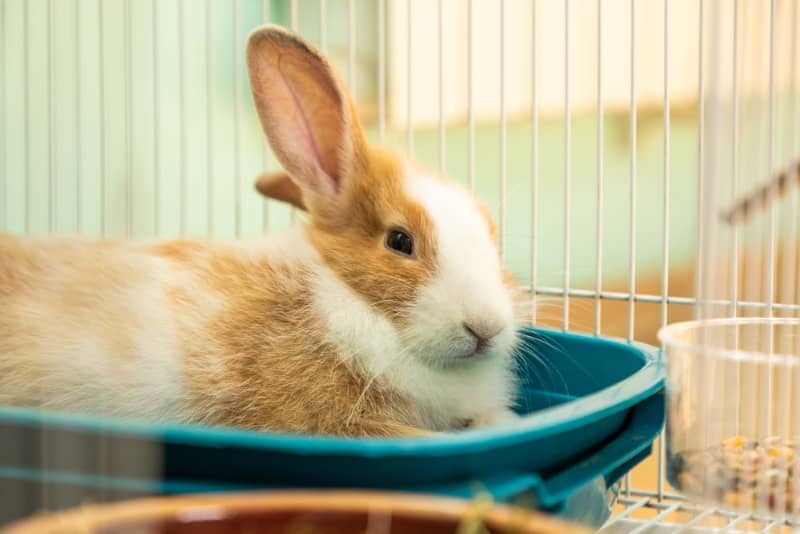
Essential care information for new and existing owners.
Life expectancy for rabbits is typically 3-5 years with proper care.
Habitat
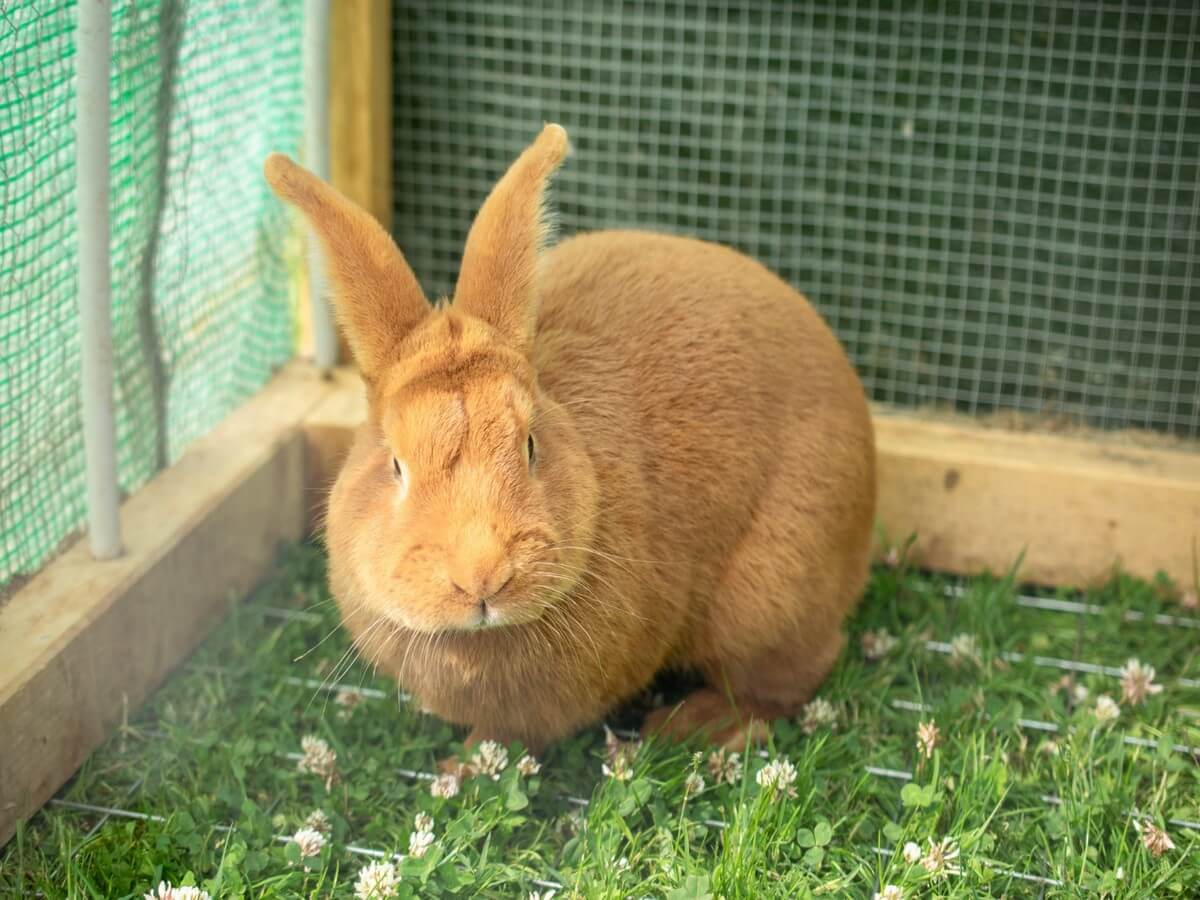
Rabbits need a large, secure living space with room to move, stretch, and stand fully upright. Small cages are not suitable for long-term housing.
Minimum space:
- A large enclosure or pen with constant access to a safe exercise area
- Enough height to stand on hind legs without ears touching the top
Rabbits are active and require daily exercise outside their enclosure.
- Provide soft flooring to protect their feet
- Include hiding areas for security
- Add toys and tunnels for enrichment
A proper setup helps prevent boredom, stress, and destructive behaviour.
Diet
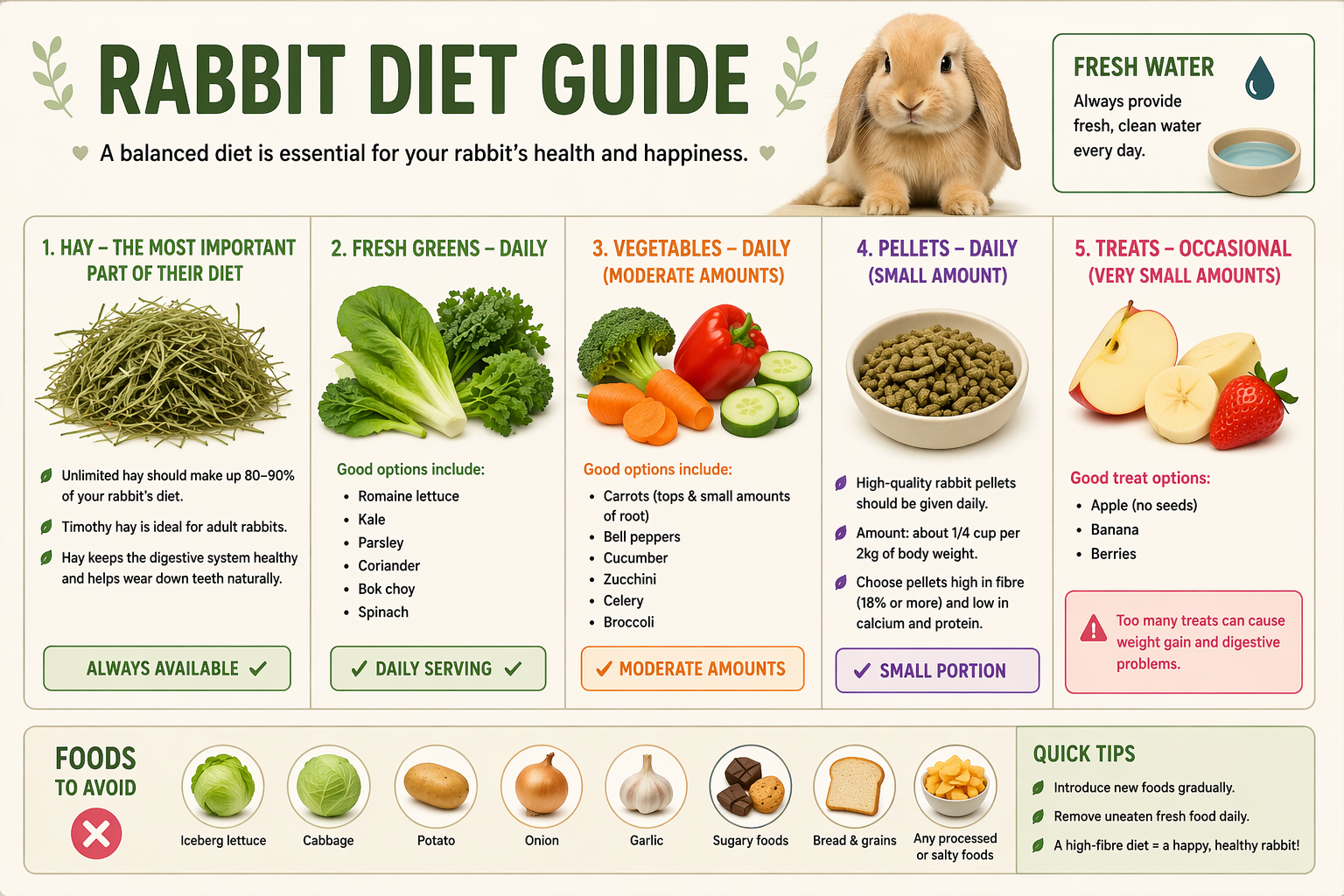
A rabbit’s diet is essential for their digestive health and should be high in fibre.
Main diet (most important):
- Unlimited hay (timothy hay is ideal)
Fresh foods:
- Leafy greens: romaine lettuce, kale, parsley
- Vegetables: carrots, bell peppers (in moderation)
Pellets:
- Small daily portion of high-quality pellets
Treats:
- Fruits like apple or banana (small amounts only)
Fresh water should always be available. Avoid sugary or processed foods.
Temperature & Environment
Rabbits are sensitive to temperature and can overheat easily.
- Ideal temperature: 10–20°C
- Avoid direct sunlight and hot rooms
Important:
- Temperatures above 25°C can cause heatstroke
- Ensure good ventilation and shaded areas
Unlike some small animals, rabbits do not hibernate.
Hydration & Hygiene
- Provide fresh water daily (bowl or bottle)
- Clean living area regularly
- Remove soiled bedding and waste daily
Rabbits groom themselves and do not need bathing. Bathing can cause stress and illness.
Grooming:
- Brush regularly, especially long-haired breeds
- Check nails and trim when needed
Behaviour & Social Needs
Rabbits are intelligent and social animals that need interaction and stimulation.
- Can form strong bonds with owners
- Often benefit from living with another rabbit (if bonded properly)
- Require daily interaction and enrichment
Without enough stimulation, rabbits may become bored or destructive.