Essential care information for new and existing owners.
Habitat
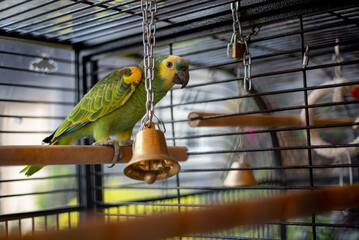
Parrots require a large cage with enough space to fully stretch their wings and move freely.
Minimum requirements:
- Cage wide enough for full wing extension
- Bar spacing appropriate for species size
Parrots need time outside the cage daily for exercise and mental stimulation.
- Provide perches of different sizes
- Add toys for enrichment and chewing
- Include food and water bowls
A poor environment can lead to stress, feather plucking, and behavioural issues.
Diet
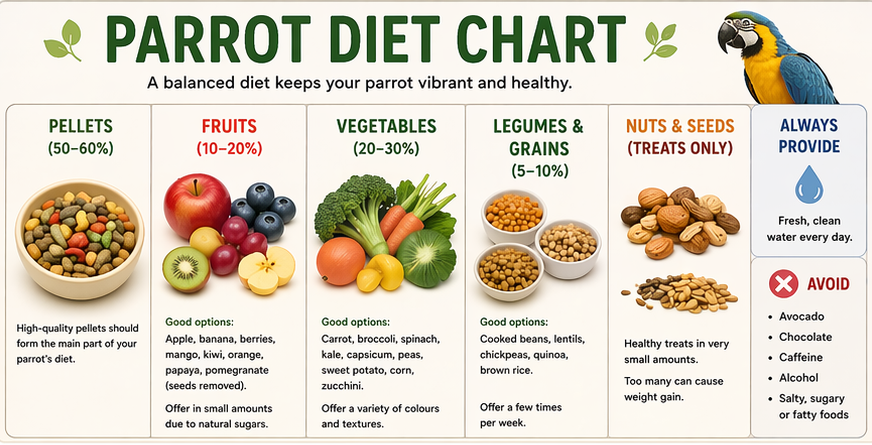
A balanced diet is essential for a parrot’s health and longevity.
Main diet:
- High-quality pellets (should make up most of diet)
Fresh foods:
- Vegetables: carrots, broccoli, spinach, peppers
- Fruits: apple (no seeds), berries, banana (small amounts)
Occasional foods:
- Seeds and nuts (high in fat, feed sparingly)
Fresh water must always be available. Avoid avocado, chocolate, caffeine, and salty foods.
Temperature & Environment
- Ideal temperature: 18–26°C
- Avoid drafts and sudden temperature changes
Parrots are sensitive to air quality:
- Avoid smoke, aerosols, and strong fumes
- Keep in a well-ventilated room
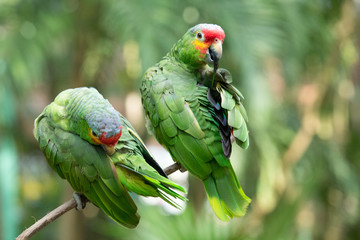
Hygiene & Care
- Provide fresh water daily
- Clean cage regularly
- Remove uneaten food, provide fresh food daily
Parrots enjoy bathing:
- Offer a shallow water dish or misting
- Helps keep feathers clean and healthy
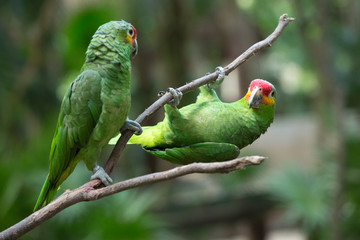
Behaviour & Social Needs
Parrots are highly intelligent and social animals that require daily interaction.
- Can form strong bonds with owners
- Require mental stimulation (toys, training)
- Can become bored or stressed if ignored
Lack of stimulation may lead to screaming or feather plucking.